
Currently, oil prices remain high. In 2026, domestic oil prices are overall in a high-level fluctuation, with 92-octane gasoline fluctuating above 8 yuan for a long time. The cost of filling a tank of gas is much higher than in previous years, and "fuel saving" has become the primary consideration for consumers when buying a car. On March 30, Changan Automobile released its own global hybrid China solution - Blue Whale Super Hybrid, focusing on a new model of "equal emphasis on oil and electricity, intelligent integration," and also featuring four core highlights: "economical, powerful, quiet, and reliable." The most attractive part is its hardcore fuel consumption promise: blue-plate sedans have urban fuel consumption of 2.98L/100km, and blue-plate SUVs have urban fuel consumption of 3.98L/100km.

To be honest, at first many people thought this was promotional hype. After all, for many hybrid models on the market, the official fuel consumption looks beautiful, but in actual driving it is not like that at all. Fortunately, many industry media outlets and the first batch of car owners have now conducted dynamic real-world tests on the fourth-generation Eado Blue Whale Super Hybrid and the fourth-generation CS75PLUS Blue Whale Super Hybrid, precisely to see whether this fuel consumption can withstand the test of real road conditions.
Real road conditions speak, measured fuel consumption as low as 1.6L/100km
Unlike some brands that only test fuel consumption under ideal conditions, this real-world test was completely like the way ordinary people drive every day. Whether it was traffic jams during morning and evening rush hours, uphill and downhill mountain roads, or low-speed driving in the city, everything was tested, and common situations such as full load and air conditioning were also simulated, restoring the most realistic driving experience.

The actual test results were even more surprising than expected. Not only were they lower than the officially promised fuel consumption, but clear measured data was also provided. Specifically, the urban measured fuel consumption of the fourth-generation Eado Blue Whale Super Hybrid stayed strong throughout, with an average performance of 2.3L/100km, much lower than the official standard of 2.98L/100km, and the lowest result of 1.6L/100km was even more astonishing.
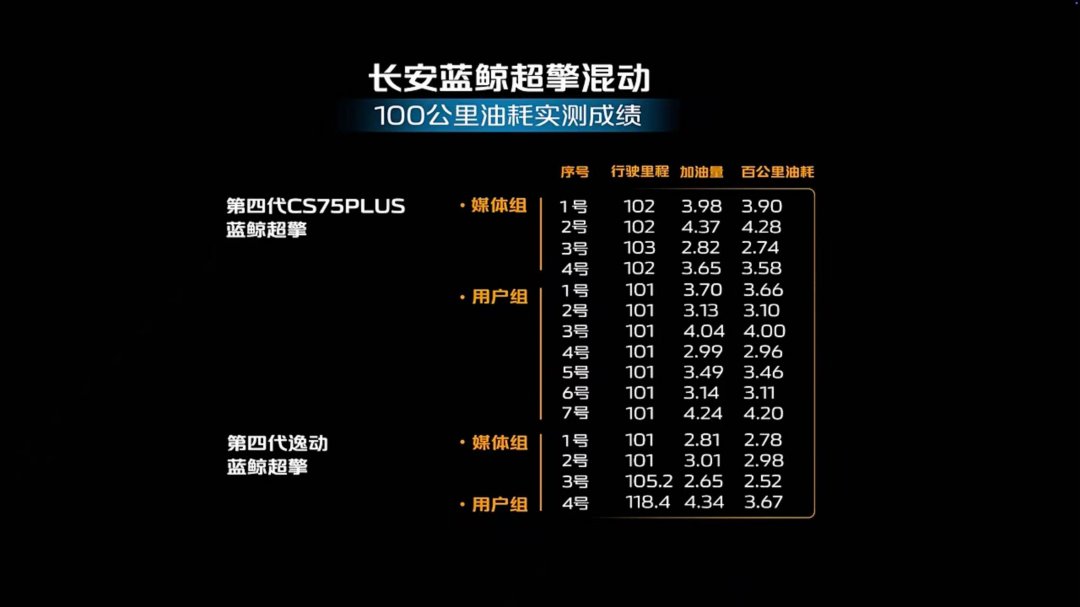
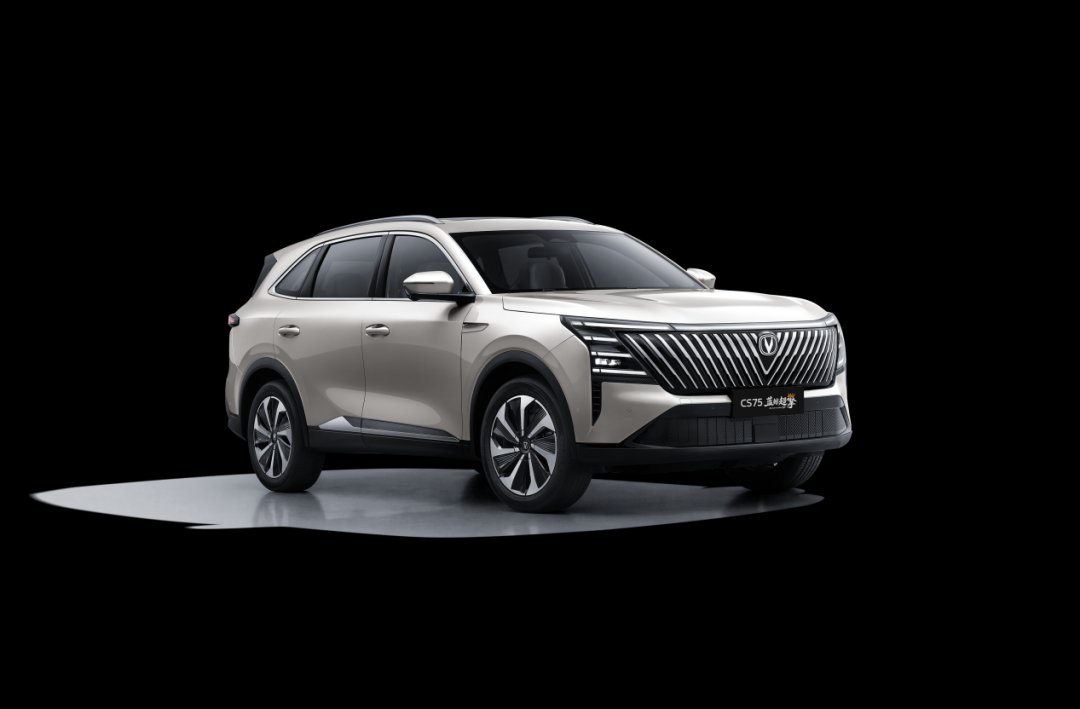
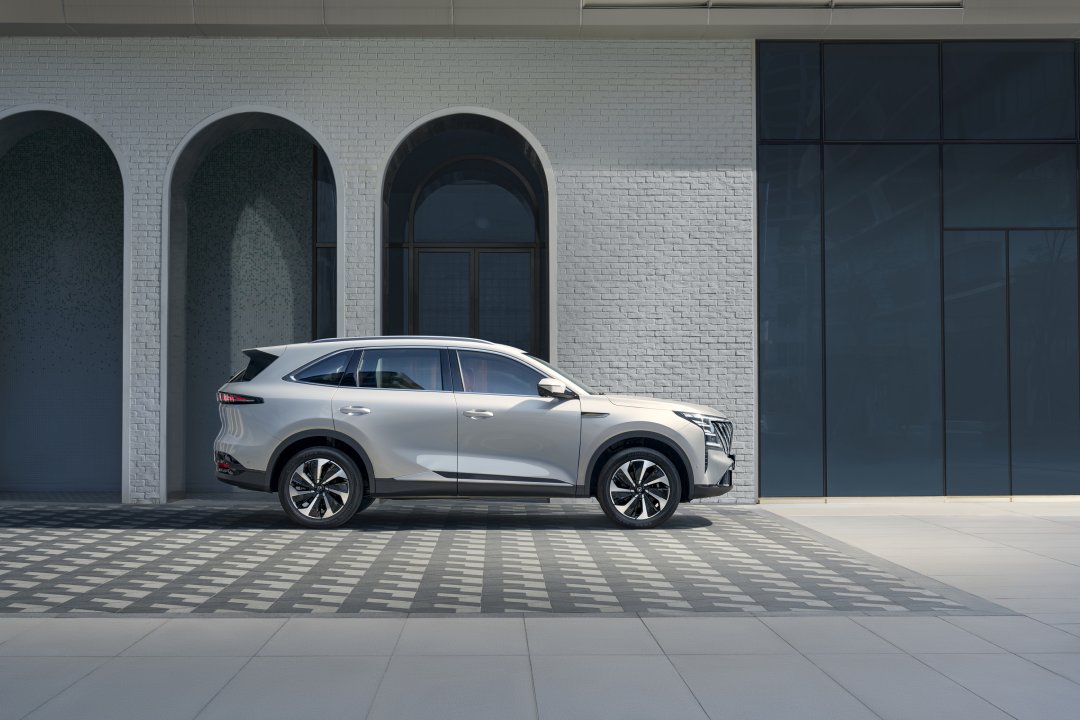
As an SUV model, the fourth-generation CS75PLUS Blue Whale Super Hybrid also performed impressively in real tests, with the lowest measured fuel consumption reaching 2.3L/100km and average fuel consumption stable at 3.0L/100km, nearly 1L lower than the official standard of 3.98L/100km. You should know that this was still under normal driving conditions without deliberately saving fuel. Such results directly refreshed everyone's understanding of the fuel consumption of blue-plate hybrid SUVs and once again proved that the fuel-saving strength of Blue Whale Super Hybrid is by no means empty talk.
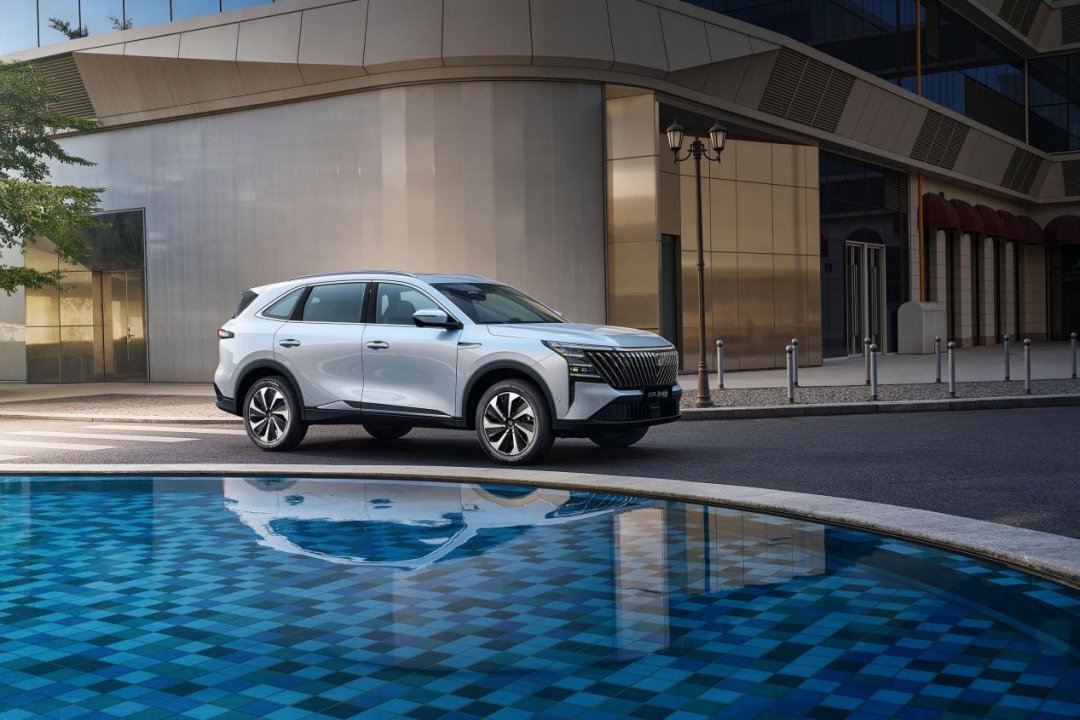
From official promises to media real-world tests, and then to real feedback from car owners, Blue Whale Super Hybrid has truly proven itself, and has also made everyone truly believe that its "fuel saving" is not paper data in a laboratory, but something that can be felt on the road. In particular, the measured result of 1.6L/100km for the fourth-generation Eado Blue Whale Super Hybrid is the best proof of its strength.
Backed by hardcore configuration, teaching you how to avoid pitfalls when choosing a hybrid
Being able to achieve such good measured fuel consumption is certainly not accidental; it relies entirely on the hardcore technical support of Blue Whale Super Hybrid.
Changan equipped it with the world's first 500Bar ultra-high-pressure fuel injection system. This injection pressure is twice that of Toyota's 250Bar system, and it can atomize fuel particularly finely, mix it more evenly with air, and burn it more fully, naturally without wasting fuel.
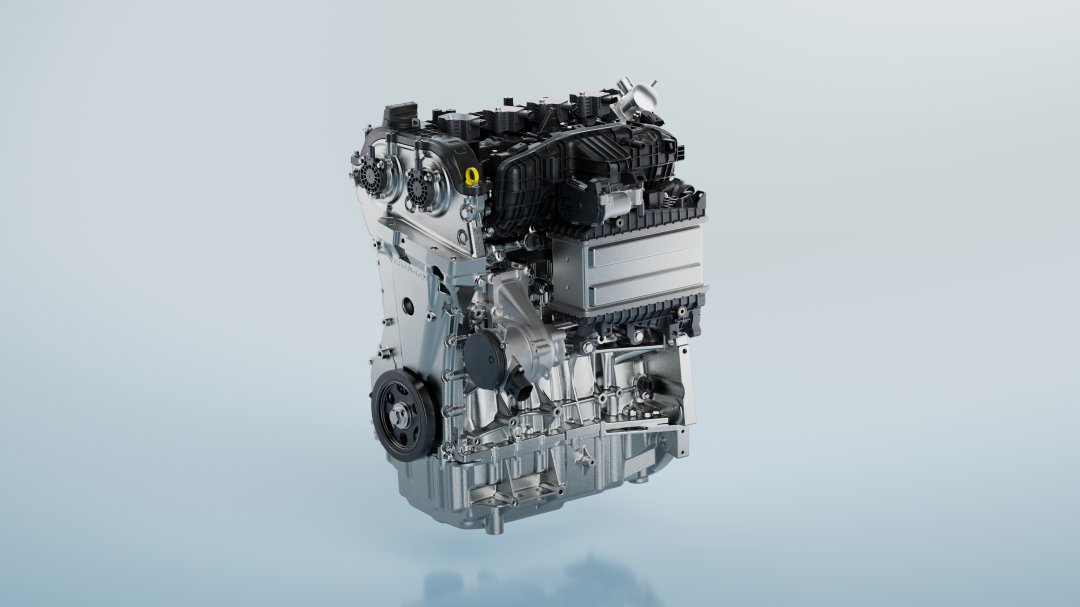
In addition, there is the world's first 150mJ high-energy ignition system, plus the industry's highest stroke-to-bore ratio of 1.45. Under an ultra-high compression ratio of 16:1, combustion efficiency is higher. Ultimately, it can achieve an average operating efficiency of 40.9% at 1500-4200 rpm, with a high-efficiency zone accounting for 56.3%. Whether driving on the highway or around the city, the engine can work in the high-efficiency range, and every drop of fuel can be put to good use. This is the fundamental reason why it can measure an ultra-low fuel consumption of 1.6L/100km.
In addition to a hardcore engine, Blue Whale Super Hybrid is also equipped with an AI cloud intelligent control system, which is like installing a "fuel-saving brain" in the car, allowing technology to truly be applied to daily driving. This AI cloud intelligent control can perceive road conditions, driving habits, and vehicle load at the millisecond level, and switch in real time among three modes: pure electric, oil-electric hybrid, and direct engine drive, making it more worry-free and practical.
Three pieces of advice to avoid pitfalls when buying a car
Combining this real-world test and these technologies, here is also a reminder for everyone: do not fall into three pits when buying a hybrid model, and this is also the key point we want to emphasize this time. The first pit is looking only at official data for fuel consumption and not at real-world tests. The official fuel consumption of many brands is measured under the most ideal laboratory conditions, which is far from our actual driving. It is very common for actual fuel consumption to be 30%-50% higher than the official figure. In contrast, the 2.98L and 3.98L of Blue Whale Super Hybrid, as well as the measured result as low as 1.6L/100km, have been tested in multiple cities and multiple road conditions, and are truly verifiable.
The second pit is looking only at peak thermal efficiency and not at the high-efficiency range. Peak thermal efficiency is the limit that the engine can reach only under its best condition, and it simply cannot be used in normal driving. What truly affects fuel consumption is how large the high-efficiency range is and how high the average efficiency is. The 56.3% high-efficiency zone proportion of Blue Whale Super Hybrid can be used for more than 90% of the time in daily driving, making it much more practical than those models with only a narrow high-peak range. This is also the key to why it can stably achieve low fuel consumption.
The third pit is only listening to the technology on the PPT and not looking at actual implementation. Some brands pile up a bunch of technical terms that look very impressive, but in actual driving it is not like that at all. In contrast, technologies such as the 500Bar ultra-high-pressure injection and AI cloud intelligent control of Blue Whale Super Hybrid can truly translate into a fuel-saving experience, especially the measured result of 1.6L/100km, which can be directly felt after a test drive.
Overall, Changan Blue Whale Super Hybrid uses real measured tests to break everyone's doubts and relies on hardcore technology to support ultra-low fuel consumption. It not only fulfills the official promise, but also achieves the surprising measured result of 1.6L/100km. At the same time, it also teaches everyone how to choose a hybrid without falling into pits. It does not play tricks, but is based on the travel scenarios of ordinary people, turning fuel saving from a promotional slogan into a real car-use experience.


