July in the auto market, in one word: sluggish.
The CPCA data is out: national passenger car retail sales in July 2026 are projected to fall 16.8% year-on-year; the off-season plus the pull-forward from June's volume push have dragged the overall market down, with most brands leaning on promotions to hold the line.
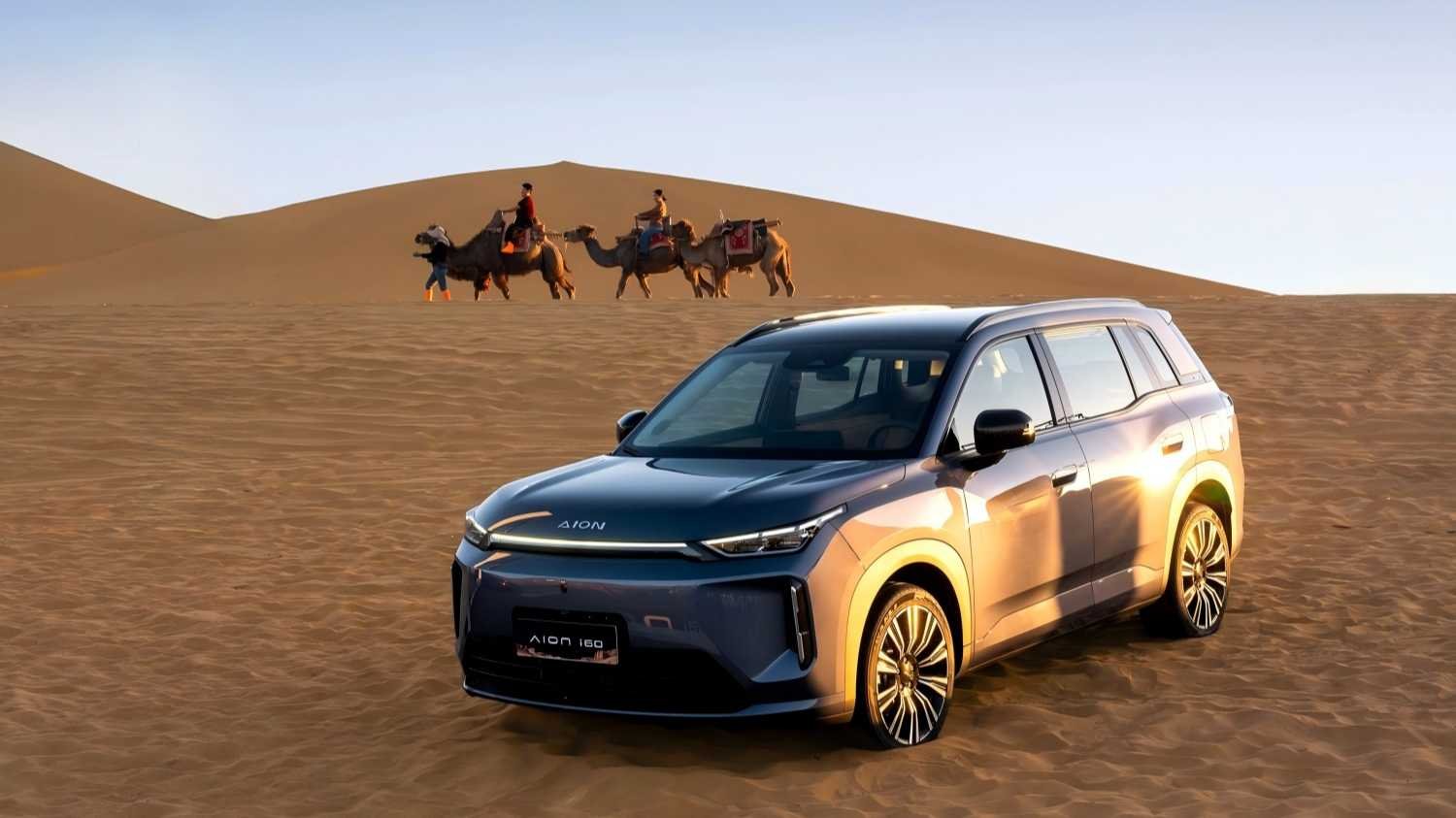
The numbers from Hyper Aion are on a completely different wavelength from the broader market: July terminal sales of 34,987 units, up 31.74% year-on-year and 3.87% month-on-month, marking five consecutive months of double-digit year-on-year growth.
At its peak, 35,000 units might not have seemed like much, but the quality of this growth is different—C-end users account for 81%.
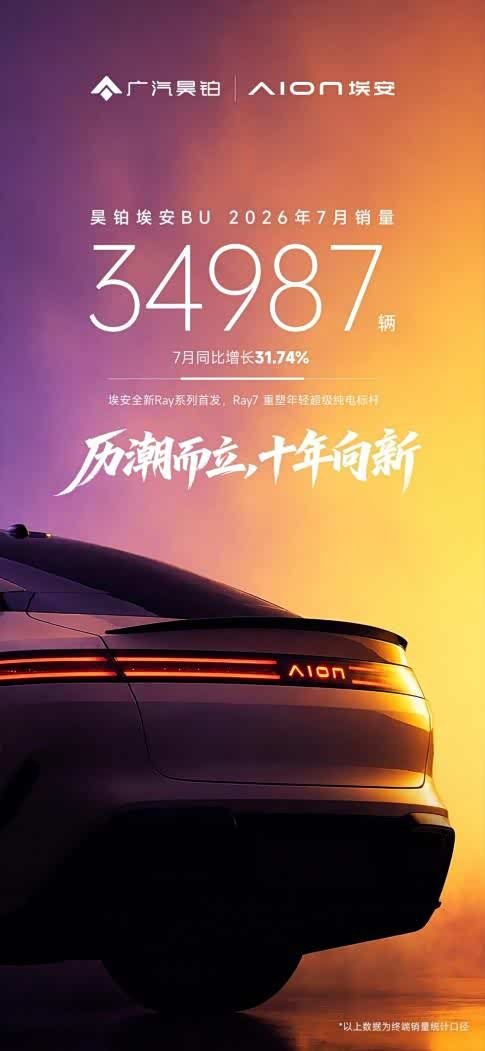
After all these years in the auto industry, my sense is that to judge whether a brand is truly healthy, don't just fixate on total volume—look at who's actually paying. Visiting offline stores these days, you can clearly feel the share of individual car buyers rising visibly; 81% means that for every 5 cars sold, more than 4 are bought by individual users with real money. That figure is the most noteworthy part of the entire report card.
To understand the confidence behind this growth, you first have to recognize an industry reality: new energy brands that can steadily make it through ten years are inherently rare.
At the 2018 peak, there were more than 480 domestic new energy vehicle brands. By 2026, those still at the table can be counted on two hands. Subsidies receded, battery costs soared, and round after round of price wars came—many brands had their moment in the sun but didn't survive to the next cycle.
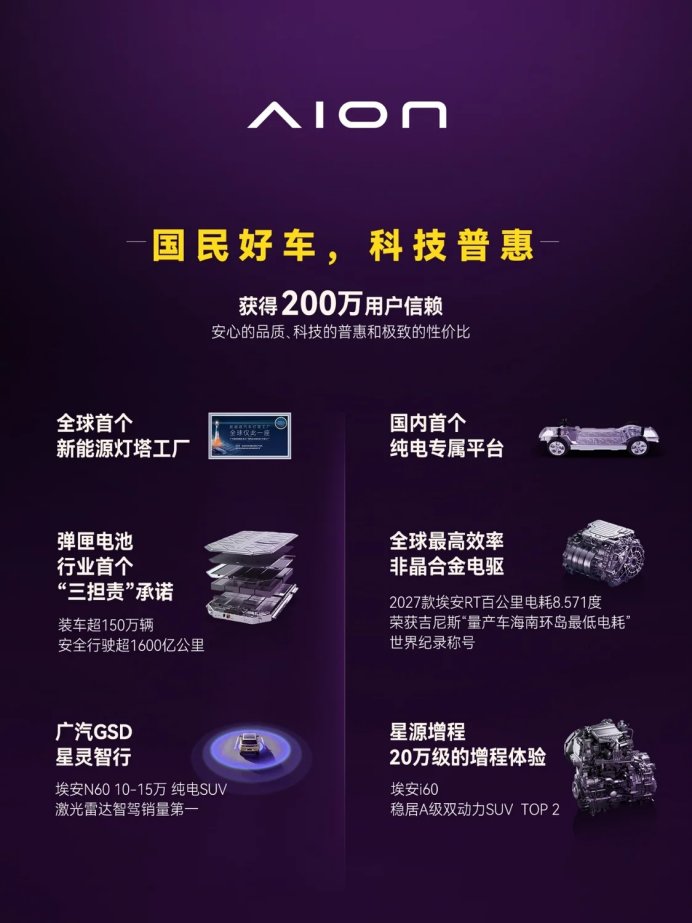
Aion was founded in 2017 and has just entered its tenth year. Currently, relying on the coordinated development of the Hyper and Aion dual brands, it has accumulated 2 million users. The reason it has endured all these years isn't complicated: self-built full-chain three-electric systems, and treating owner reputation as the foundation for long-term standing.
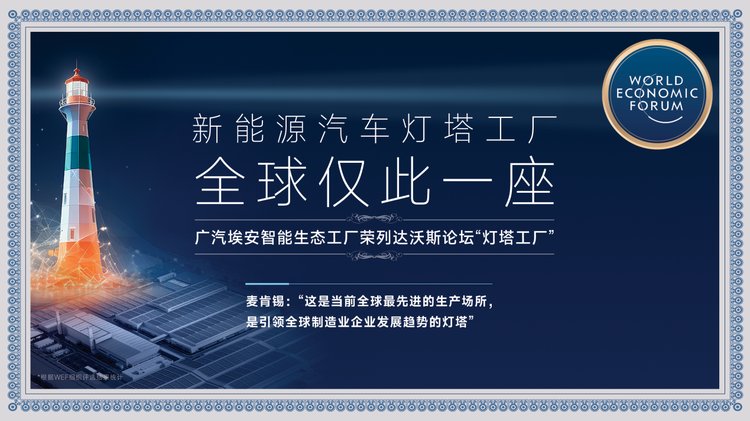
In 2017, GAC invested 45 billion yuan to build the New Energy Intelligent Connectivity Industrial Park. Over the years it has accumulated a complete foundation: the world's first new energy vehicle lighthouse factory, the GEP dedicated pure electric platform, Magazine Battery, Quark Electric Drive, the Yinpai battery factory, and full coverage from L2 to L4 intelligent driving. These things don't easily trend on social media, but in an elimination tournament, the invisible chassis determines how far you can run.
With the chassis stable, you earn the right to talk about swapping engines.
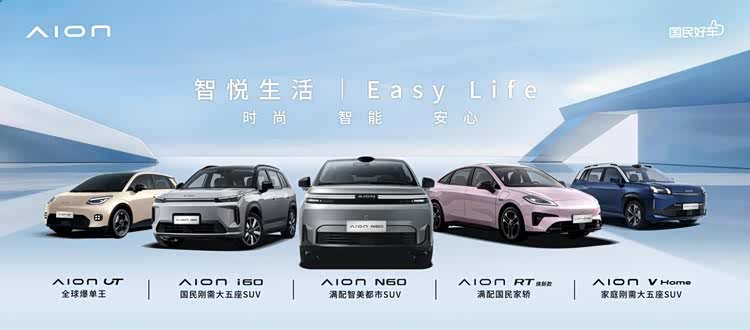
In the past, Aion relied on balanced and practical products to gain broad market recognition. As the brand continued to deepen its cultivation of the private consumer market, its user structure completed a comprehensive upgrade. In the first half of 2026, C-end users accounted for 81%, with individual consumption becoming the core support for the brand's sales growth.
The growth logic has changed, and so have the models carrying the load.
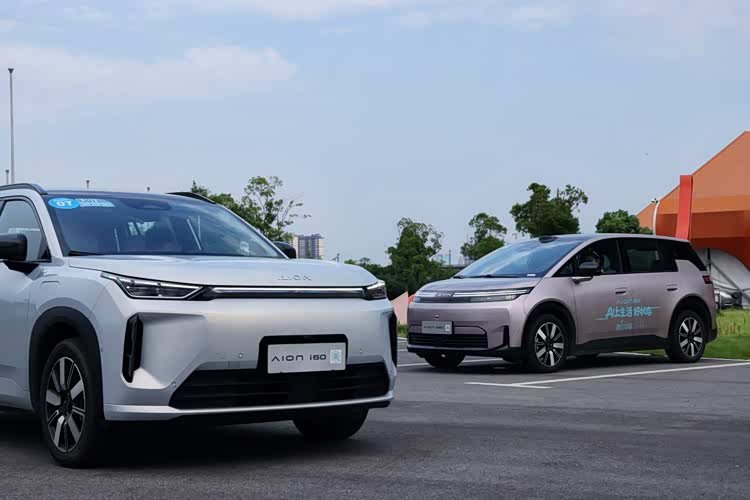
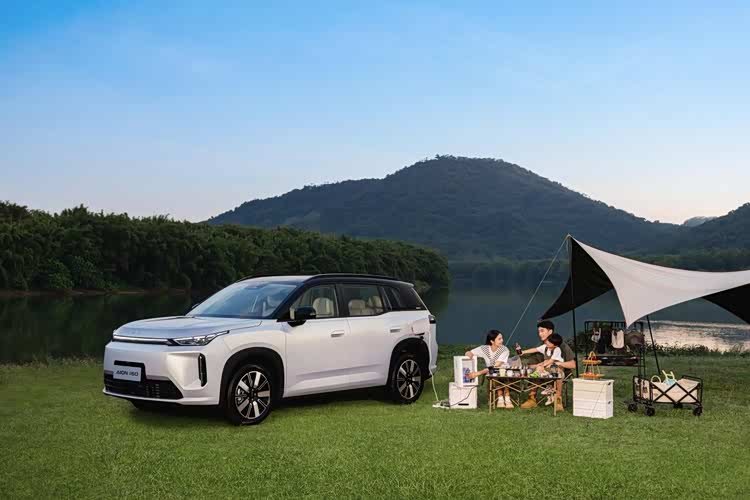
The Aion i60, an A-segment new energy SUV, takes a "cultivation-style" approach—iterating while selling, improving the product based on real user feedback. Monthly sales steadily exceed 10,000, ranking second on the A-segment dual-power SUV sales chart, with users aged 26 to 35 accounting for 42%—precisely the group making family car-buying decisions in China.
It has thoroughly grasped the pain points of family用车: the trunk fits a stroller, the rear row accommodates a child safety seat, and a full family of five doesn't feel cramped; the range is enough for weekend trips back to the hometown, and the price sits in the sweet spot of family budgets. The "burn one, compensate three" warranty promise is written in black and white—what family cars lack most is trust cost, and Aion backs it up with a contract.
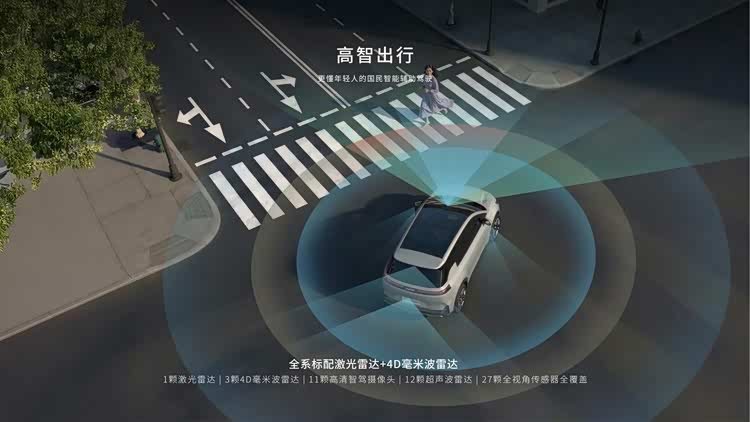
The Aion N60 does something else: it brings LiDAR-based intelligent driving straight into the 100,000 to 150,000 yuan price range. Equipped with the same-source algorithm as WeRide's L4 Robotaxi, it covers intelligent driving functions on urban expressways and highways; young people can experience 300,000-yuan-class intelligent driving for 100,000 yuan; users aged 25 to 35 account for 79.8%, making it the segment sales champion.
One captures families, the other captures young people; that's how the C-end foundation was solidified.
The i60 and N60 becoming hits is partly due to solid products, but more critically, the system changed.
At the end of 2025, backed by GAC's "Panyu Action," the Hyper Aion BU was the first to be established, implementing the IPD and IPMS systems—R&D, production, sales, and service fully connected, with the decision-making chain significantly shortened. Huawei ran this system for over twenty years, and its core is just one thing: user needs drive R&D, not engineers calling the shots. Hyper Aion brought it into an automaker, effectively moving the power of product definition from "engineers think it's good" to "users think it's good." The dual-brand positioning is also clear—Hyper for "smart enjoyment of life," Aion for "smart joy of life," each walking its own path but pointing in the same direction.

The changes after this system was implemented are quite直观: new vehicle R&D cycles have been shortened directly from 26 months to 18 to 21 months. The i60's cultivation-style iteration is IPD working—listening to advice, changing fast, and hitting needs precisely.
With the system running smoothly, products can fly close to the ground. Facing the next decade, Aion has given its answer at the ten-year mark.
On July 28, Aion entered its tenth year. There was no sentimental marketing—it directly launched the all-new Ray lineup.
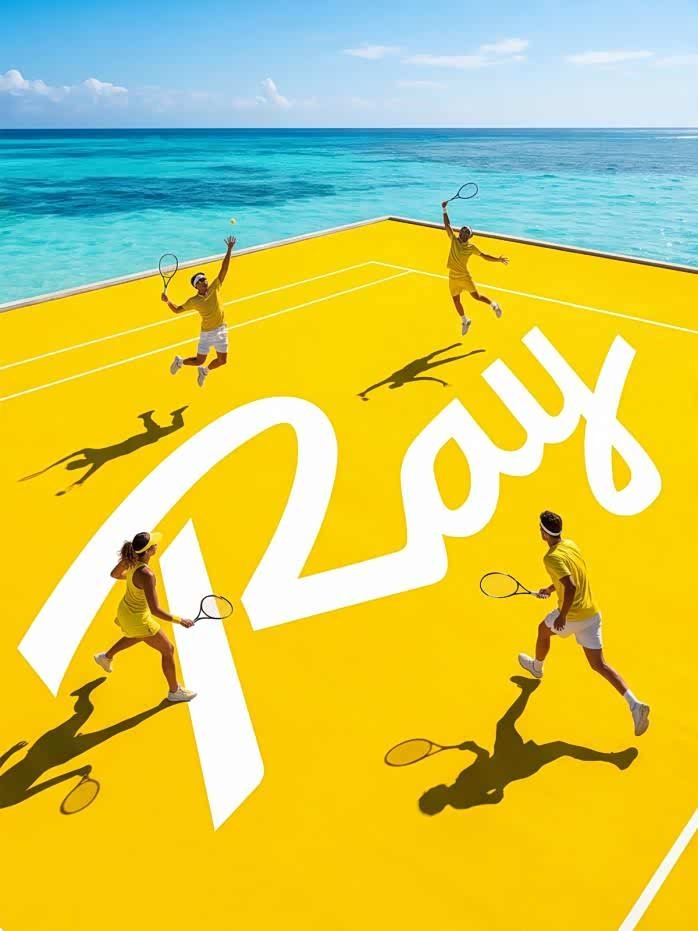
Ray means light; when pronounced, the corners of the mouth naturally turn up; the imagery is a ray—there's a starting point, no endpoint. Free, vivid, young—that's Ray's attitude, and also Aion's posture for the next decade.
The first model, the Ray7, has already been unveiled: a mid-to-large super pure electric sedan; 5-meter-class low-slung wide body, the world's first super chassis with a chip-level drive-control fusion architecture, CATL battery, and L4 same-source LiDAR assisted driving.
Why choose this moment to launch Ray? Users under 30 already account for nearly 40% of new energy car buyers—failing to capture this increment would be handing the market over. But when most brands make youth-oriented models, they follow the path of "youthfulness = reduced features and lower prices"—cut intelligent driving, water down the three-electric system, downgrade the interior; it's almost become an industry formula.
Aion changed its approach; the scale effect of full-stack self-development spreads R&D costs thinner, folding LiDAR, high-efficiency electric drive, and long-range three-electric systems into the mainstream 100,000 to 200,000 yuan price range. The Ray7's chip-level drive-control fusion architecture is Aion's new chassis technology landing point in the youth-oriented track. Daring to make LiDAR standard isn't because of generosity, but because it has genuinely driven down the premium from upstream supply chains. Making good things affordable for young people—not giving them a stripped-down car.
But then again, when buying a new energy car now, what consumers worry about most isn't how much range is discounted, but how long the brand will live. After all, 4S stores closing, parts supply cut off, OTA updates stopping—these have actually happened in the past two years.
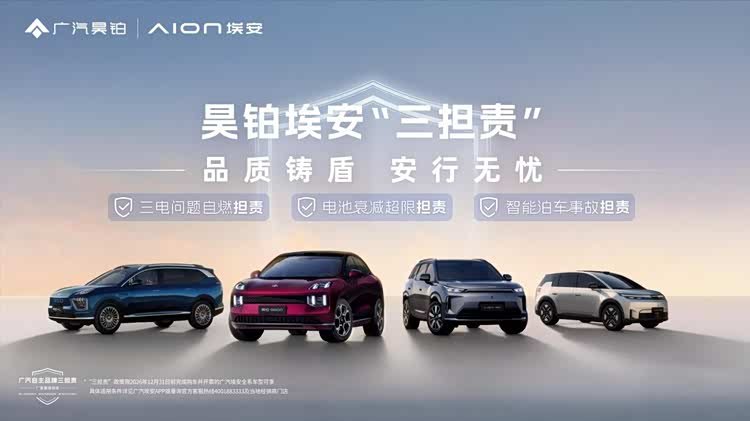
The certainty Hyper Aion can offer breaks down into three layers. State-owned enterprise backing is there—supported by GAC's complete industrial system, not swayed by short-term capital market fluctuations, maintenance channels will still be open five or ten years from now. The commitments in the contract are also solid—lifetime three-electric warranty as standard; "three responsibilities," with the manufacturer covering three-electric spontaneous combustion, excessive battery degradation, and intelligent parking accidents; the i60 even has "burn one, compensate three."
These terms aren't marketing talk—they're the confidence given by technological accumulation. The most reassuring thing is still real reputation—a large number of owners have driven hundreds of thousands or even millions of kilometers, and battery health is still above 80%. This kind of reputation is built up over years; no single advertising push can buy it.
Aion's 34,987 units in July is the verification after the growth path switch was completed.
From three-electric self-development to C-end transformation, from the i60 and N60 to the Ray7—these moves aren't fighting separate battles; they're pushed forward along the same logical line.

But hitting the numbers is only the starting point; the C-end transformation isn't finished just by handing in a report card. Whether the Ray7 can catch young people's expectations, and whether Hyper and Aion can truly establish differentiation in users' minds, are the exam questions for the next decade.
Standing through the tides, ten years toward the new. In the next decade, we look forward to seeing how far this Ray can shine.