 Click the arrow to "Blue Letters" and follow us!!
Recently, multiple automakers have announced that their models have integrated DeepSeek, and the next trend in the smart cockpit competition has fully opened up. On February 11, J.D. Power | JunDi, together with Tongji University's HVR Lab and XAI Lab, released the "2025 Huawei Award Forward-Looking Trends Release: China Smart Cockpit Evaluation White Paper" (hereinafter referred to as the Huawei Award Smart Cockpit White Paper) — as an authoritative research institution, J.D. Power also introduced AI technology for the first time: using Dr. Power AI for data analysis and summarization.
The "Huawei Award Smart Cockpit White Paper" reached a conclusion: consumers are more eager for AI to learn driving habits and provide scenario recommendations. However, from the current perspective, consumers' focus on smart cockpits still has primary and secondary distinctions. Although brands including Chery, Dongfeng (including Voyah, M-Hero, eπ, Aeolus and Nammi), Geely, Zeekr, XPeng, BYD, IM Motors, GAC Group, Deepal, Leapmotor, and FAW-Volkswagen have all announced integration with DeepSeek, there is still a certain "time lag" in consumer experience feedback. So, for smart cockpits today, how should consumers' priorities be ranked?
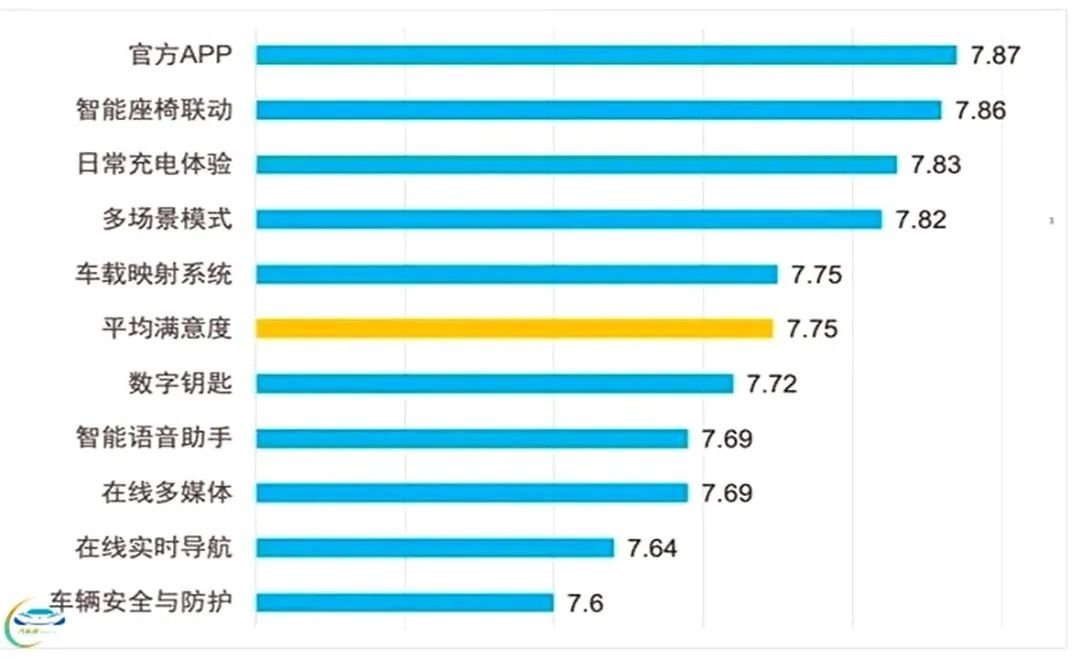

Official APP still tops the attention list

In fact, from the perspective of ordinary consumers, even when logging into DeepSeek from a PC or mobile phone, the fun and energy contained in AI large models are still in the "early stage of exploration." Therefore, based on the research conducted by J.D. Power and Tongji University from a practical perspective, the top item of consumer attention is still the visible level of official APP experience.
The "Huawei Award Smart Cockpit White Paper" points out that with the improvement of the intelligent consumer experience index in 2024, consumers' desire for intelligent configurations is becoming stronger. Technology is not only changing the functions of automobiles, but also changing our expectations for future mobility.
According to this consumer survey, the official APP topped the list with a high satisfaction score of 7.87 points — which is not surprising, since for most smart models today, the first point of consumer contact is the official APP.
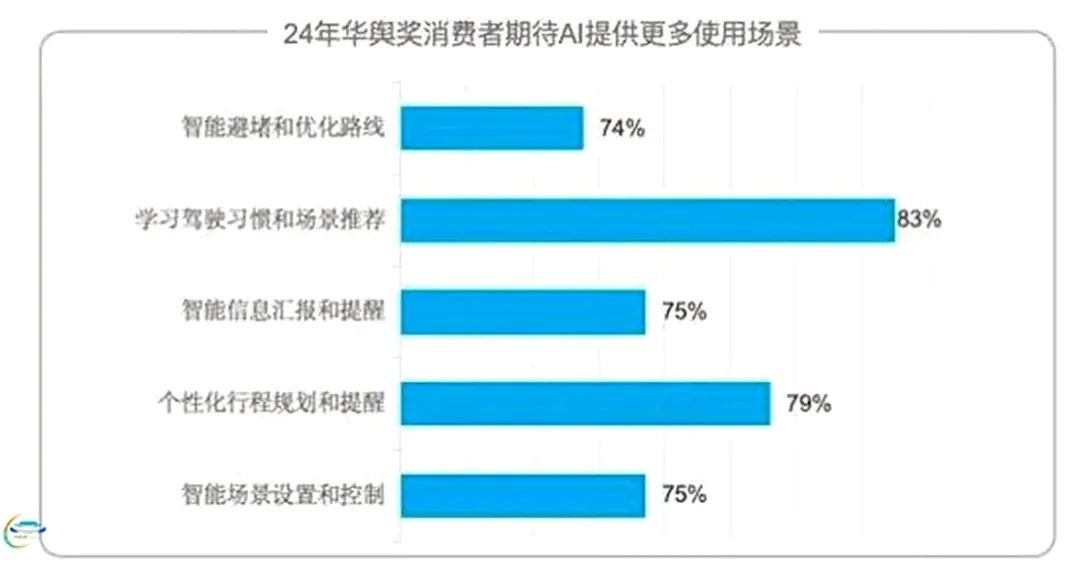

Let AI "be the driver"

Beyond the practical perspective, consumers' forward-looking demand for smart cockpits today is: they hope in-vehicle AI large models can "be the driver" — the "Huawei Award Smart Cockpit White Paper" mentions that "in-vehicle AI large models are bringing revolutionary changes to smart cockpits, not only making speech recognition more accurate and sentiment analysis more considerate, but also providing tailored services according to drivers' habits. Cars are no longer just means of transportation, but more like an intelligent partner that understands you. Learning driving habits and scenario recommendations are among the AI functions consumers most look forward to, accounting for 83%, which indicates that consumers hope AI can personalize to their driving habits and provide corresponding scenario suggestions."
Analyzing the functions of most smart cars today, including models equipped with AI large models (DeepSeek has just been integrated and has not yet been experienced), the vast majority mainly emphasize improving the recognition accuracy and response speed of intelligent voice, as well as functions such as navigation and entertainment. AI learning driving habits and scenario recommendations actually already belong to the category of intelligent driving technology. Judging from the current state of intelligent driving technology, there may still be a certain gap in meeting consumers' expectations.
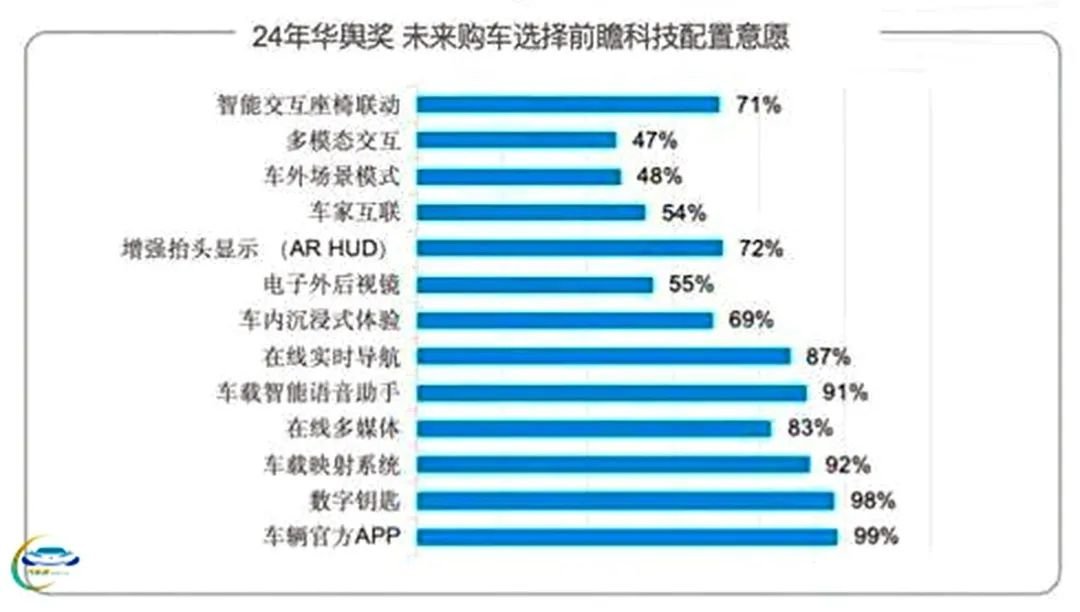

"Technology" is key to car-buying decisions

The "Huawei Award Smart Cockpit White Paper" points out: when buying a car, consumers no longer care only about power and appearance, but pay more attention to the convenience and safety brought by intelligence. From intelligent driving to remote control, technology is quietly becoming a key factor in car-buying decisions.
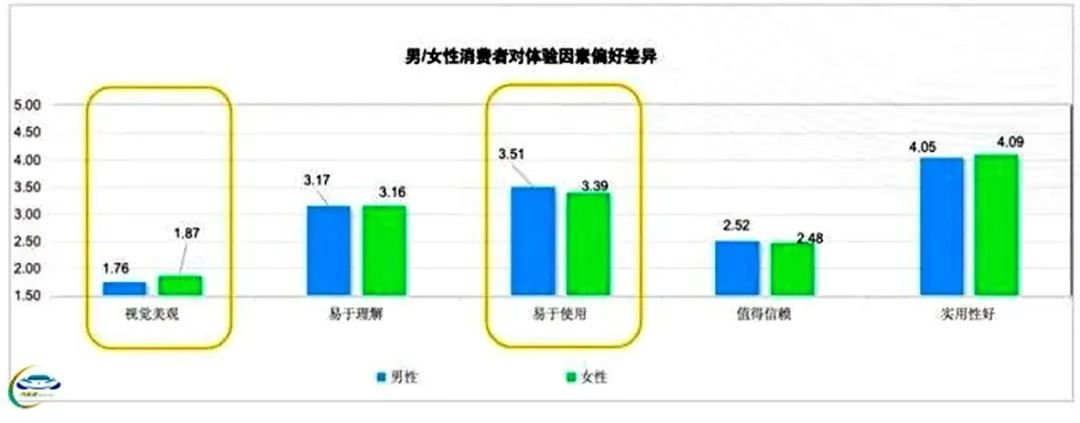
However, compared with other J.D. Power survey results, there are also gender differences. Previously, in the "2024 China Automotive Product Appeal Index Study SM (APEAL)" research report, J.D. Power mentioned that women have a relatively high preference for smart technologies such as smart car machines, while some male drivers still focus on power and driving experience. Therefore, for automakers, to appeal to men, women, the old and the young, nothing from power to smart technology can be missing.
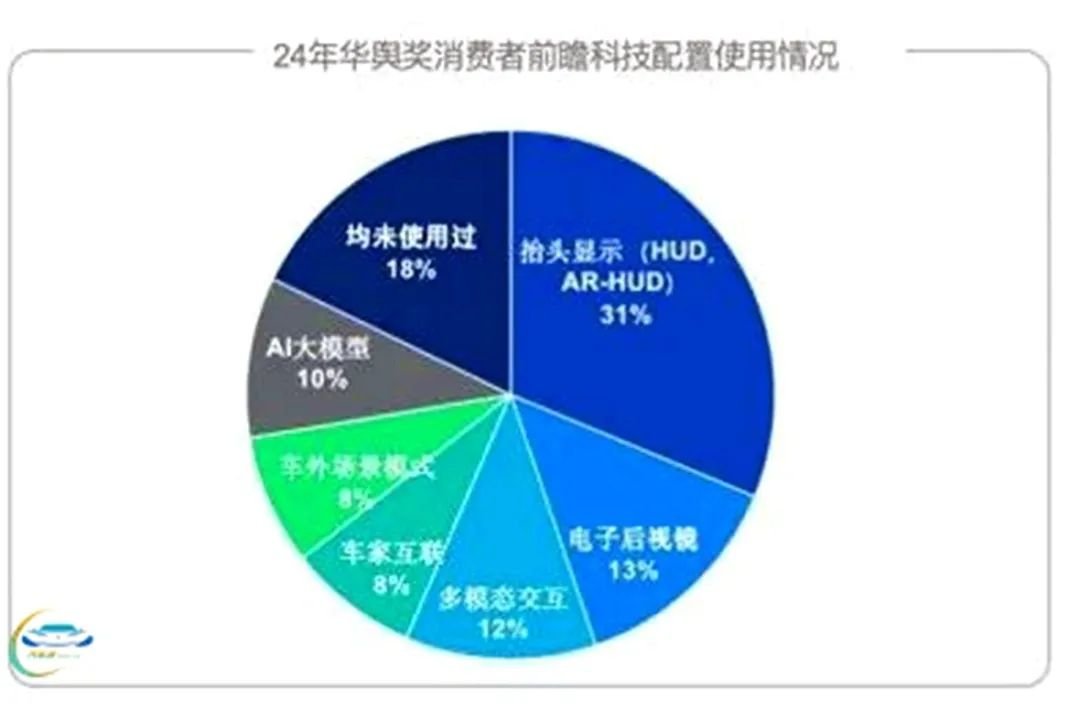
At the same time, the "Huawei Award Smart Cockpit White Paper" also mentions car-home connectivity and intelligent interaction: although the penetration of car-home connectivity and multimodal interaction technology is not yet high, their potential is limitless. Consumers already look forward to seamless connection with smart devices at home and in-vehicle systems. Intelligent mobility is not only physical movement, but also an intelligent extension of various life scenarios. In addition, 18% of consumers have not yet tried forward-looking technology configurations, which provides room for market development and attracting new users.
However, from the actual operation of ordinary consumers, the biggest problem in the interaction between smart home devices and smart car machine systems lies in inconsistent ports. The interconnection between smart car machines launched by major brands and smart home appliances is limited — some smart car machine systems can connect with very few smart home appliance brands, and relative to the complexity of operation, using smartphones to operate smart home appliances is actually easier. Therefore, from the editor's perspective, whether car-home connectivity is very necessary is still debatable.

AI large models are an inevitable trend

The editor personally believes that from the perspective of car owners' smart technology experience, the charging experience and intelligent driving assistance technology mentioned in the "Huawei Award Smart Cockpit White Paper" are more hardcore than car-home connectivity.
First, regarding the charging experience, although navigation systems built into Amap and various brand car machines currently have charging navigation functions, in actual experience, these charging functions are not very reliable: based on the editor's personal experience, for example, when driving a model with 800V ultra-high-voltage fast charging capability to a relatively old charging station, it is almost impossible to charge. In the end, one has to consult the after-sales advisor at the 4S store to learn that only newly built charging stations support the vehicle's fast charging function (neither in-car navigation nor mobile Amap navigation prompts charging station details).
Second, electric car owners who have just finished long-distance trips after the Chinese New Year may also have experienced this: the queuing situation at charging stations in service areas, as well as waiting time, charging efficiency and other parameters, cannot be found in detail from charging navigation. Therefore, improving functions in this regard appears even more urgent.
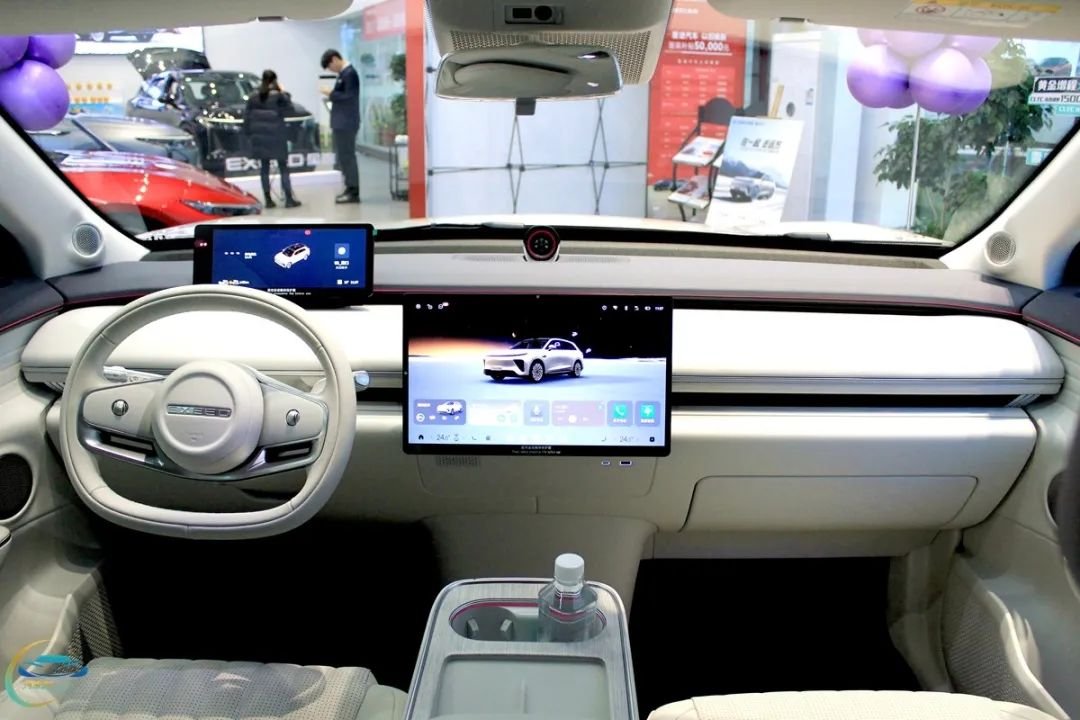
In addition, the "Huawei Award Smart Cockpit White Paper" also mentions demand for intelligent experiences such as AR-HUD head-up display, in-car mapping and multi-scenario modes. But at the core, the current functional applications of AI large models are only the tip of the iceberg. Compared with the online hype about using DeepSeek to make money and applying it to various software functions, the functional exploration of in-vehicle AI large models is still at a basic level. It is believed that in the future, AI intelligence, driving assistance and other technologies that reach the same goal by different routes will ultimately merge into a large "technology pool," transforming automobiles into "intelligent transport machines" from multiple angles (no suitable term can be found at present). This is the common expectation of consumers.
AI large models are a trend, but as this trend opens up, future smart technology still needs more innovation, and innovation that is closely connected with consumers.

Author: Liu Jungang