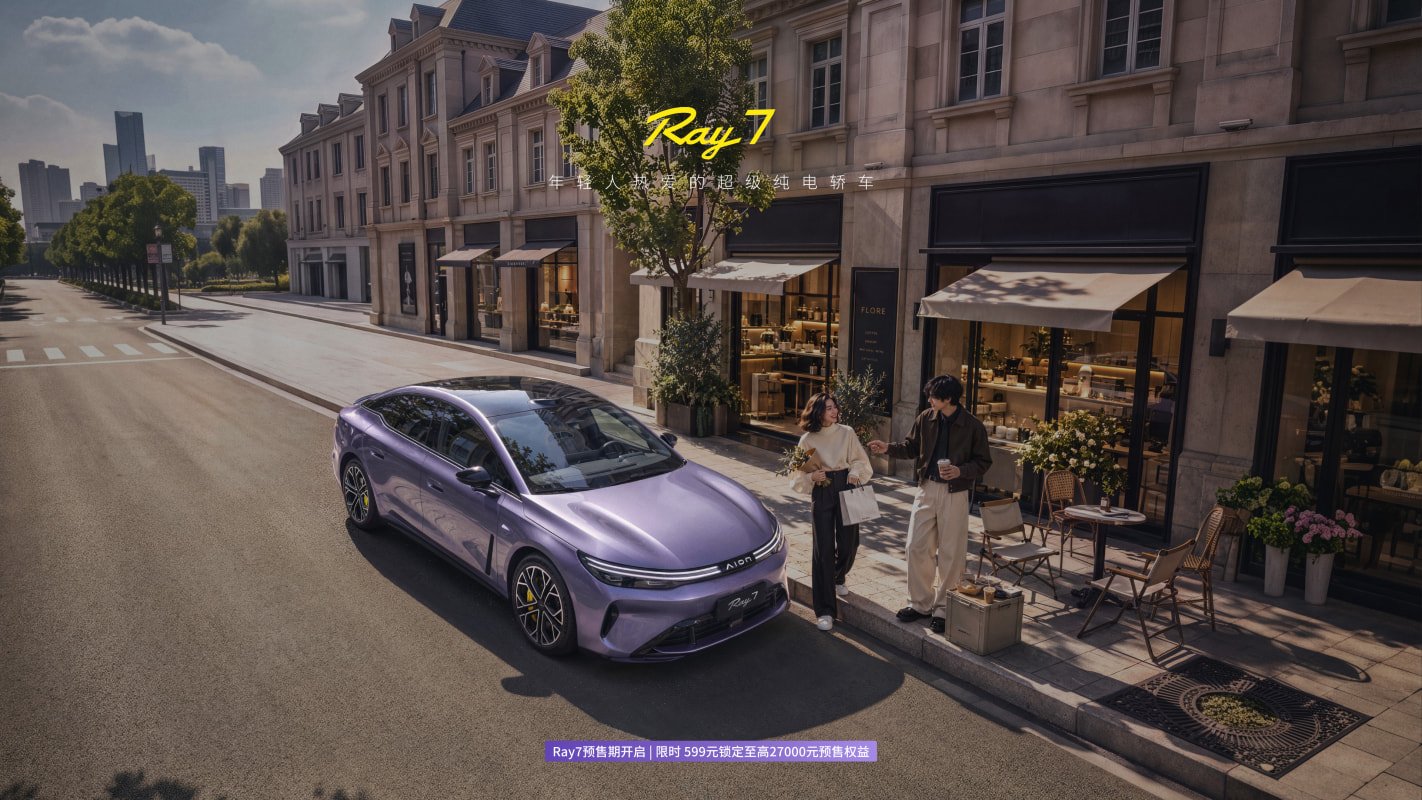
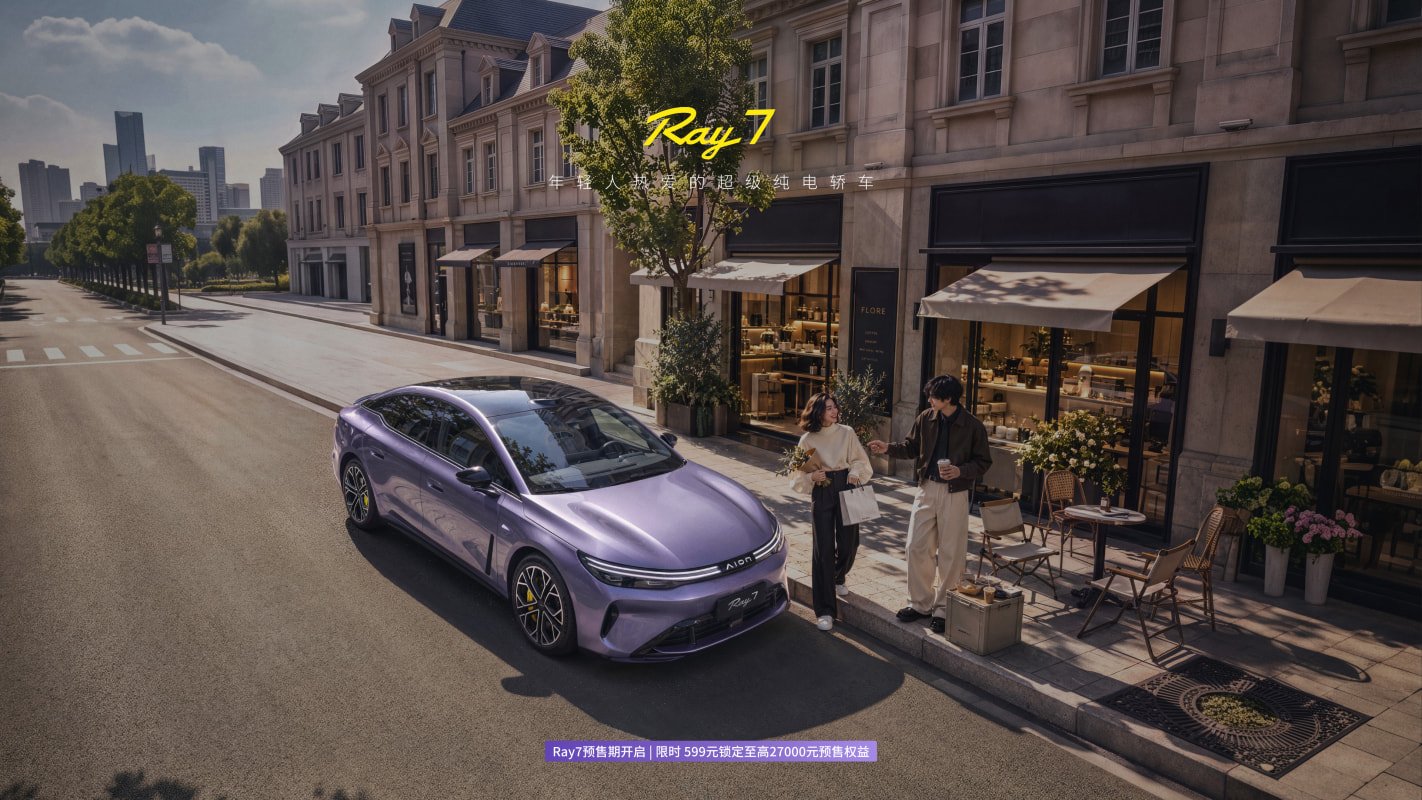
On October 17, the first model of GAC Aion's all-new Ray series, the Ray7, opened for pre-sale at the National Speed Skating Oval. The new car is offered in 5 versions, with a pre-sale price range of 128,800 to 158,800 yuan. As a mid-to-large pure electric rear-wheel-drive coupe built by the Aion brand for the young market on its tenth anniversary, the Ray7's biggest highlight is bringing technologies previously found only on high-end models—such as LiDAR, EMB fully electric wire-controlled braking, Huawei DriveONE electric drive, and advanced end-to-end intelligent driving large models—down to the 150,000 yuan price band, stirring up the 150,000 yuan pure electric sedan segment and freeing young users from having to choose between looks, handling, range, and intelligence.
I. Pre-sale version overview: lowering the threshold for high-end technology
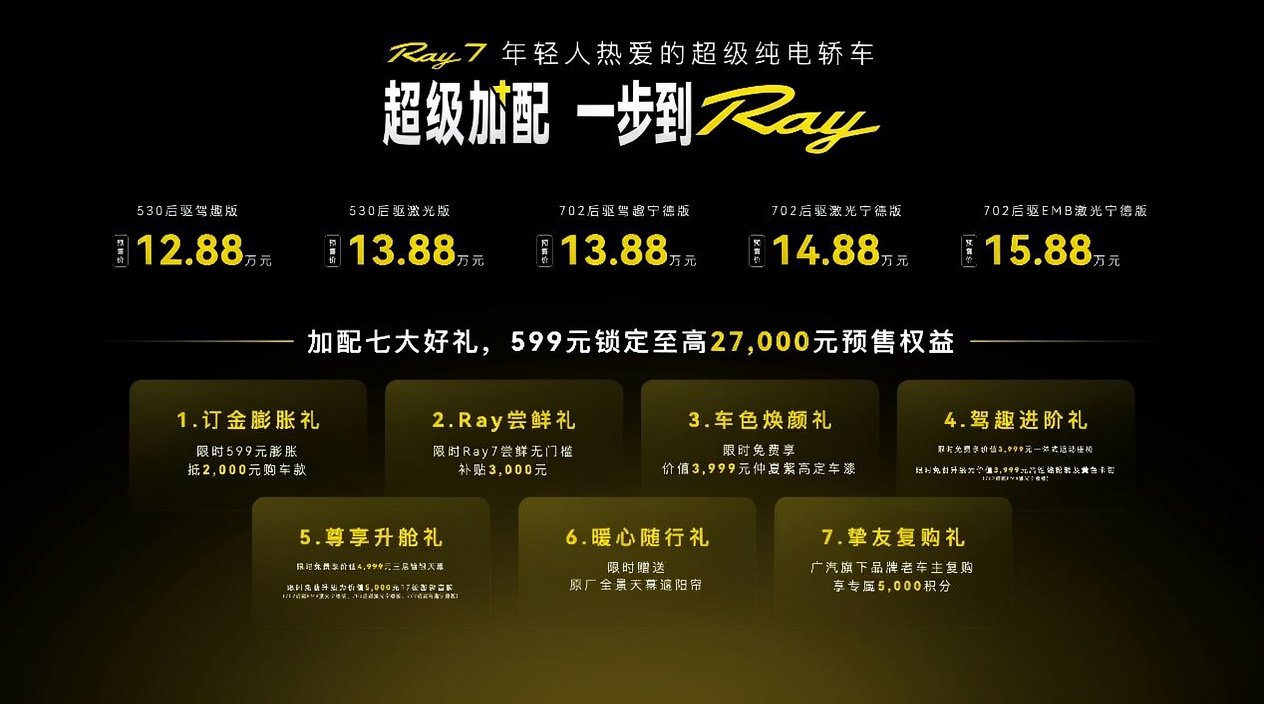
This pre-sale offers 5 configurations in total, covering two range tiers of 530 km and 702 km, with LiDAR and EMB wire-controlled braking available as options:
530 rear-wheel-drive Driving Fun Edition: 128,800 yuan
530 rear-wheel-drive LiDAR Edition: 138,800 yuan
702 rear-wheel-drive Driving Fun CATL Edition: 138,800 yuan
702 rear-wheel-drive LiDAR CATL Edition: 148,800 yuan
702 rear-wheel-drive EMB LiDAR CATL Edition: 158,800 yuan
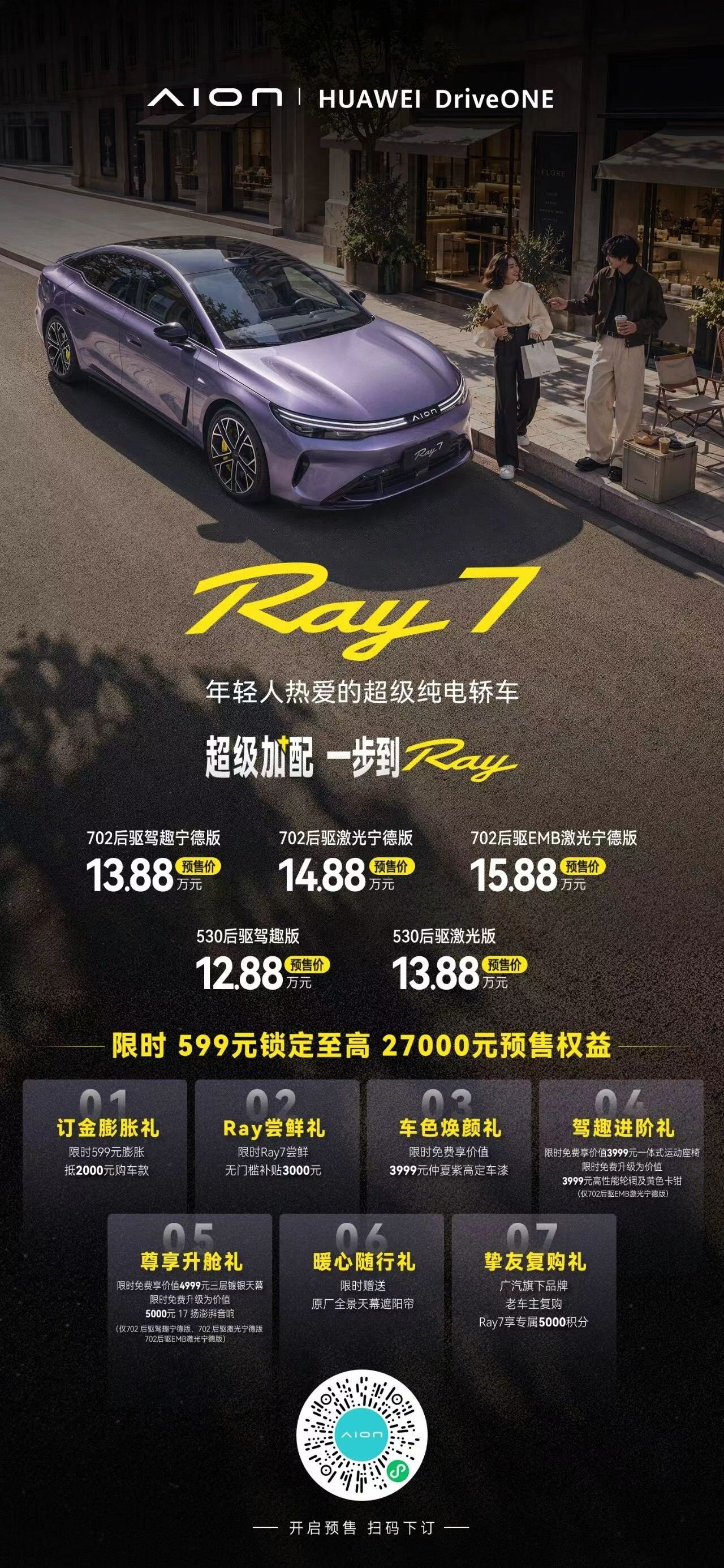
It is not hard to see that the Ray7 directly pushes the threshold for LiDAR-equipped models to within 140,000 yuan, and the top trim with EMB fully electric wire-controlled braking + LiDAR + long range can be had for under 160,000 yuan. For young consumers, a budget of around 150,000 yuan allows them to experience chassis and intelligent driving hardware previously available only on models priced above 300,000 yuan—this is the new car's core market weapon.
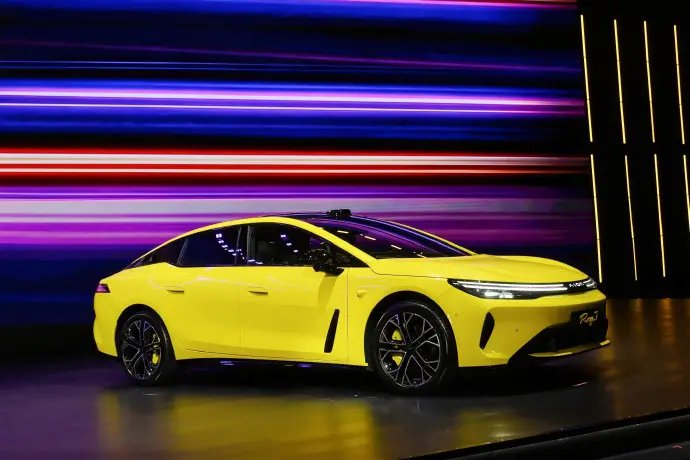
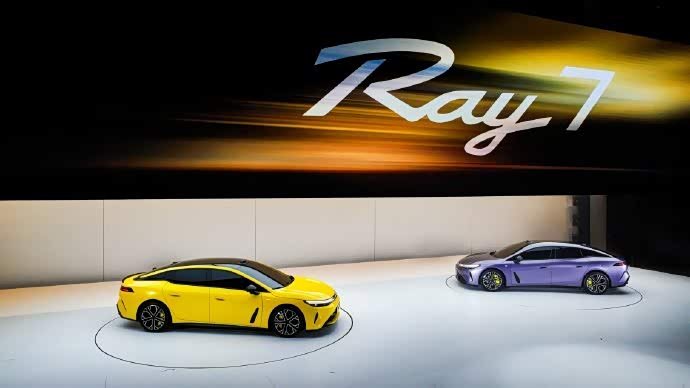
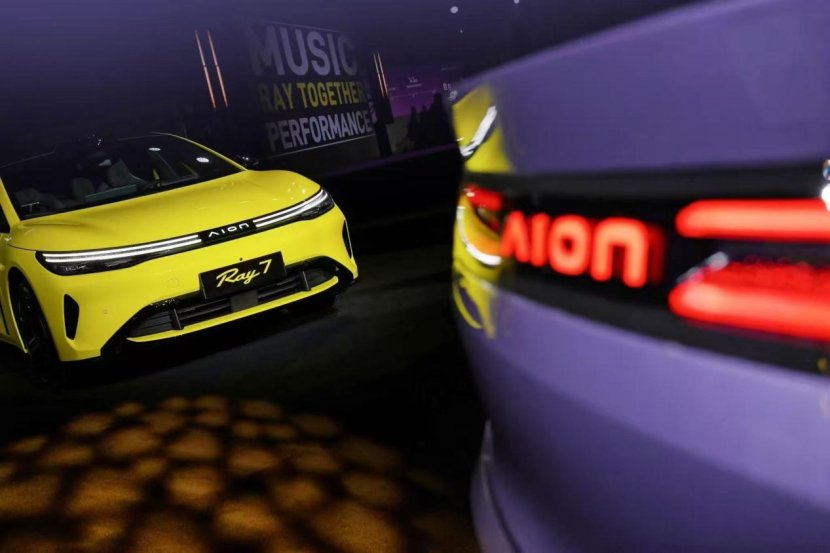
In terms of dimensions, the new car measures 4960/1900/1455 mm in length, width, and height, with a wheelbase of 2920 mm, placing it in the mid-to-large sedan class. A nearly 5-meter body length + 2920 mm ultra-long wheelbase brings a wide-body, low-slung coupe stance while ensuring spacious interior room, balancing coupe looks with family practicality. The exterior adopts the all-new "Quantum Star Ring" design language, with a 3.25-meter-long star ring light strip containing 3,678 lamp beads, delivering extremely strong recognition when lit; the whole vehicle has 14 aerodynamic optimizations, with a drag coefficient as low as 0.22Cd, paired with frameless doors, and special paint processes such as Lightning Yellow and Midsummer Purple, fully maxing out the sporty atmosphere.
II. Core chassis: Huawei DriveONE加持—wait, let me redo that.
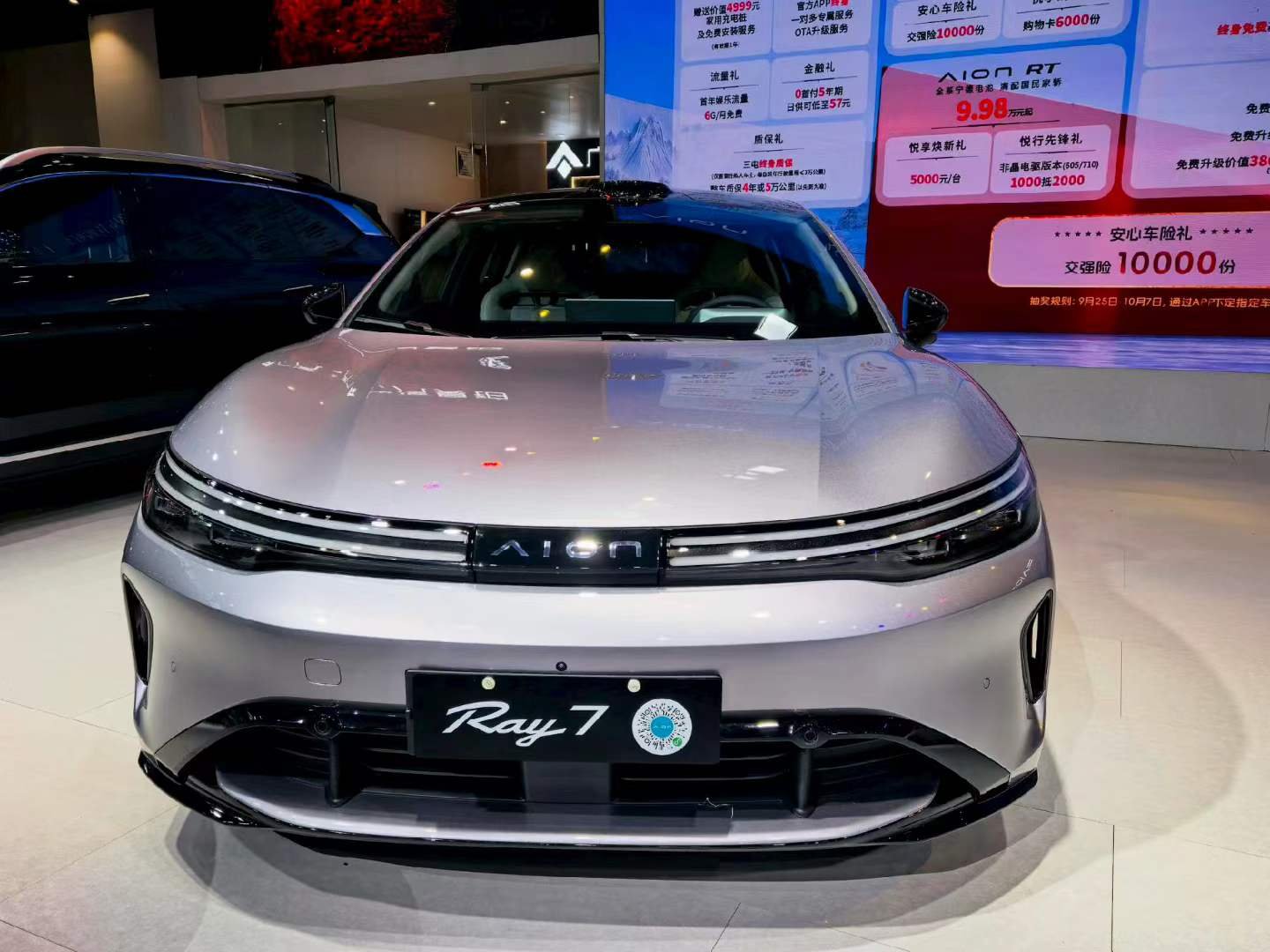
The Ray7's chassis is a core highlight of the product, equipped with a chip-level drive-brake fusion architecture + HUAWEI DriveONE EMB fully electric wire-controlled braking system, technology previously mostly found on high-end luxury models. EMB fully electric wire-controlled braking responds in just 78 milliseconds, with a 100 km/h stopping distance of 33 meters, strong resistance to thermal fade under continuous braking, and even if some brake actuators fail, the vehicle can still maintain braking capability, greatly improving safety.
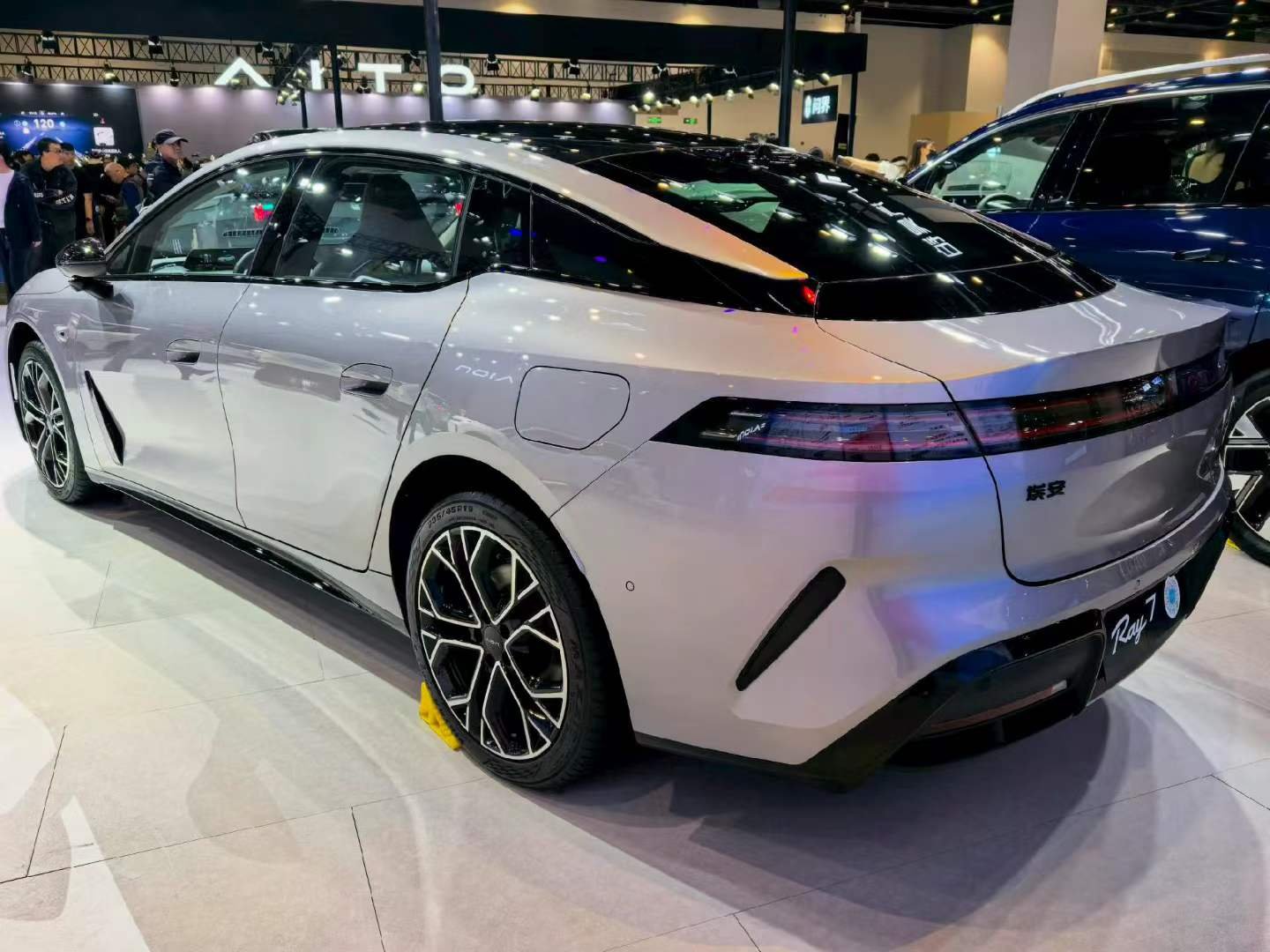
Relying on Huawei's iTRACK intelligent torque control system, the vehicle can perceive road conditions in real time and dynamically adjust wheel torque, effectively suppressing slipping on rainy, snowy, and wet roads. The chassis hardware adopts front aluminum hybrid double wishbone + rear five-link suspension, paired with FSD adaptive damping shock absorbers and front and rear stabilizer bars. The pure electric rear-wheel-drive layout retains the driving fun of a coupe while suppressing body roll in corners, preserving the handling pleasure of a rear-wheel-drive car while improving the traditional rear-wheel-drive pain points of easy tail slide and motion sickness, achieving easy driving without bumpiness and balancing driving excitement with ride comfort.
III. Super three-electric system: low energy consumption and long range, Magazine Battery reinforces the safety bottom line
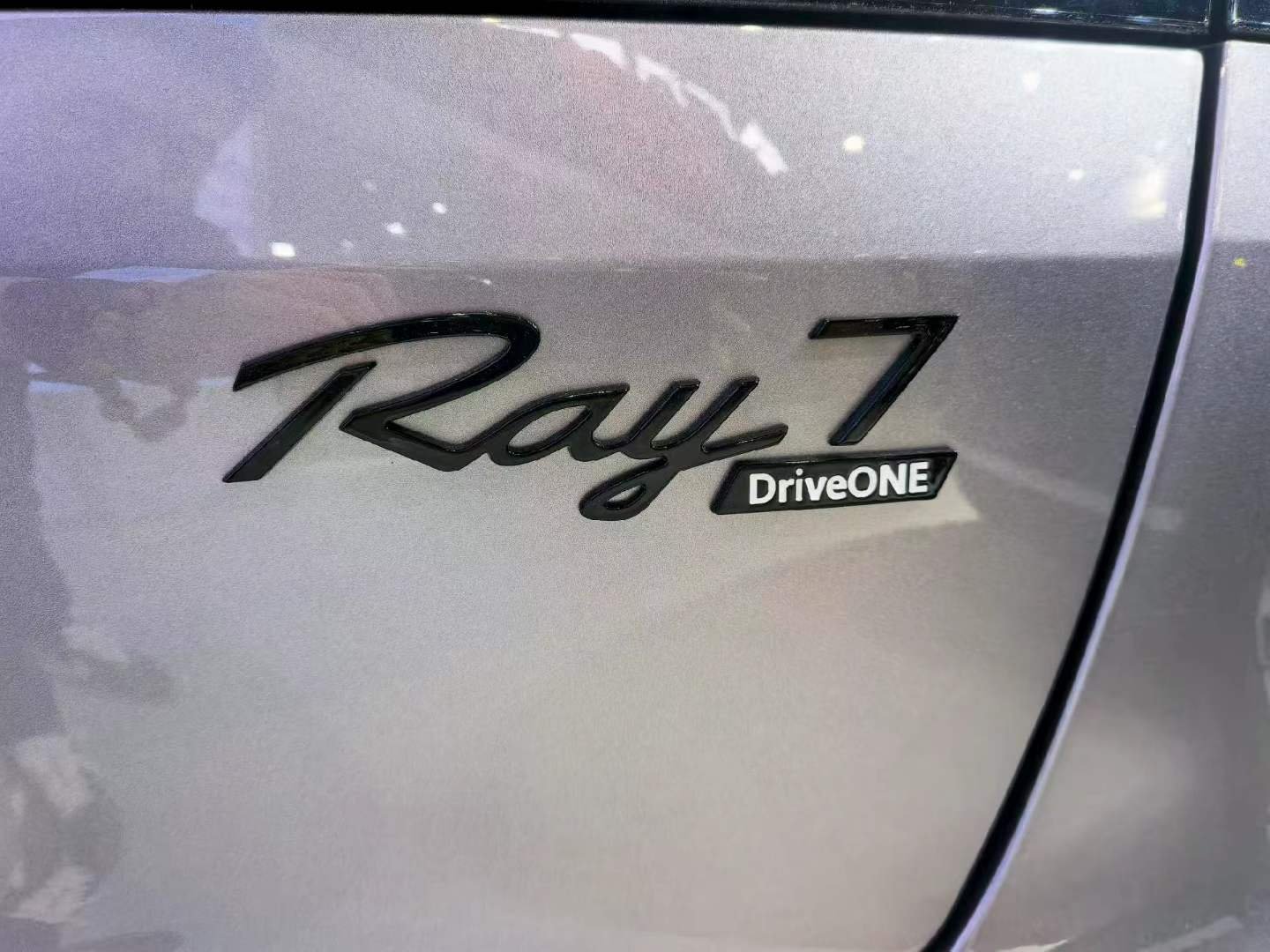
On the power side, the Ray7 is equipped with the HUAWEI DriveONE multi-in-one electric drive system, with highly integrated motor, electronic control, and reducer, combined with Aion's 28-in-one thermal management module, achieving CLTC energy consumption as low as 9.7 kWh per 100 km, 12 km of driving per kWh, and a maximum CLTC range of 702 km. Excellent energy consumption performance gives this mid-to-large sedan solid range—one charge per week for daily commuting, and reduced charging anxiety on long trips.
The battery uses CATL cells and is equipped with Aion Magazine Battery 2.0 technology, offering lightweight and thermal runaway prevention capabilities, paired with 24-hour dual safety monitoring on the vehicle side + cloud side, continuously safeguarding battery safety and reducing battery safety hazards from the ground up.
IV. Intelligent cockpit + advanced intelligent driving: 8295 chip + L4 same-origin end-to-end large model
Intelligence is divided into two major areas: cockpit and intelligent driving. The cockpit is equipped with Qualcomm's 5nm Snapdragon 8295P chip, 24GB memory + 128GB storage, paired with a 15.6-inch 2.5K high-definition central control screen, with smooth system response. The interior adopts a simple soft-light floating center console, with diffuse reflection technology reducing glare; the front row features one-touch zero-gravity seats supporting ventilation, heating, and driver's seat massage, with cloud-soft fabric balancing touch and stain resistance. The rear seats have a 100° backrest angle and sufficient cushion length, reducing fatigue on long rides, balancing the needs of a sporty coupe and a comfortable family cockpit.
On intelligent driving hardware, higher-end models are equipped with 27 automotive-grade full-view sensors, including a 192-line LiDAR + 3 4D millimeter-wave radars; the algorithm uses WeRide's L4-level Robotaxi same-origin end-to-end large model. This system can handle complex urban road conditions such as narrow roads in urban villages, single-lane U-turns, lane borrowing and detouring, and parking-space-to-parking-space automated parking. Note: L4 same-origin algorithm means the algorithm technology is of the same origin, while production models still fall within the scope of L2-level driving assistance, and the driver must maintain attention at all times. This intelligent driving capability greatly enhances the Ray7's practicality in urban commuting and complex road scenarios.
V. In-depth market analysis: the 150,000 yuan pure electric segment welcomes technological involution
In the current 120,000-160,000 yuan pure electric market, most models remain at the stage of simply competing on range and price, with chassis and intelligent driving hardware generally cut back. The Aion Ray7, however, breaks out of the low-price involution mindset, focusing on "technology equality," bringing high-end wire-controlled braking, LiDAR, and double wishbone suspension down to the 150,000 yuan price point.
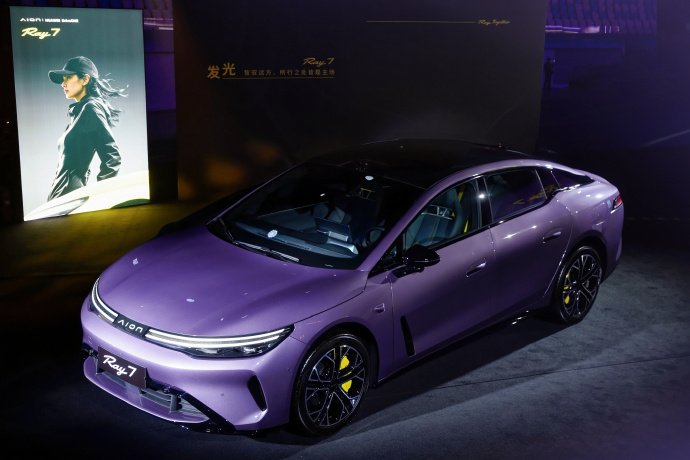
Looking at competitors, most pure electric sedans at the same price are compact or entry-level mid-size cars, and few are mid-to-large rear-wheel-drive coupes with a nearly 5-meter body length and 2920 mm wheelbase. The Ray7 targets a group of young users: those who want coupe looks and rear-wheel-drive handling, while also needing family space, long range, and advanced intelligent driving, and who do not want to sacrifice configuration for budget.
For the Aion brand, the Ray7 is the inaugural model of the all-new Ray lineup and a strategic product for the brand's tenth anniversary. The Ray series is positioned for the new generation of young users, distinct from the existing product lineup, and undertakes the task of moving the brand upward and expanding the young consumer group.
Conclusion
The greatest significance of the Aion Ray7's pre-sale is not simply adding another model, but reshaping the value standard for 150,000-level pure electric sedans. In the past, LiDAR, EMB wire-controlled braking, and double wishbone suspension were exclusive labels of high-end models; now they have been brought to a starting price of 128,800 yuan.
Of course, the final product strength still awaits verification through real-car test drives; chassis tuning, intelligent driving implementation results, and long-term energy consumption performance still need subsequent real-world testing. But it cannot be denied that the arrival of the Ray7 has already pushed competition in the 150,000 yuan pure electric market from a simple price war to a technological contest integrating chassis, three-electric systems, and intelligence. For young car buyers who pursue comprehensive product strength and refuse to compromise, the Ray7 is undoubtedly a heavyweight new car worth close attention this year.